

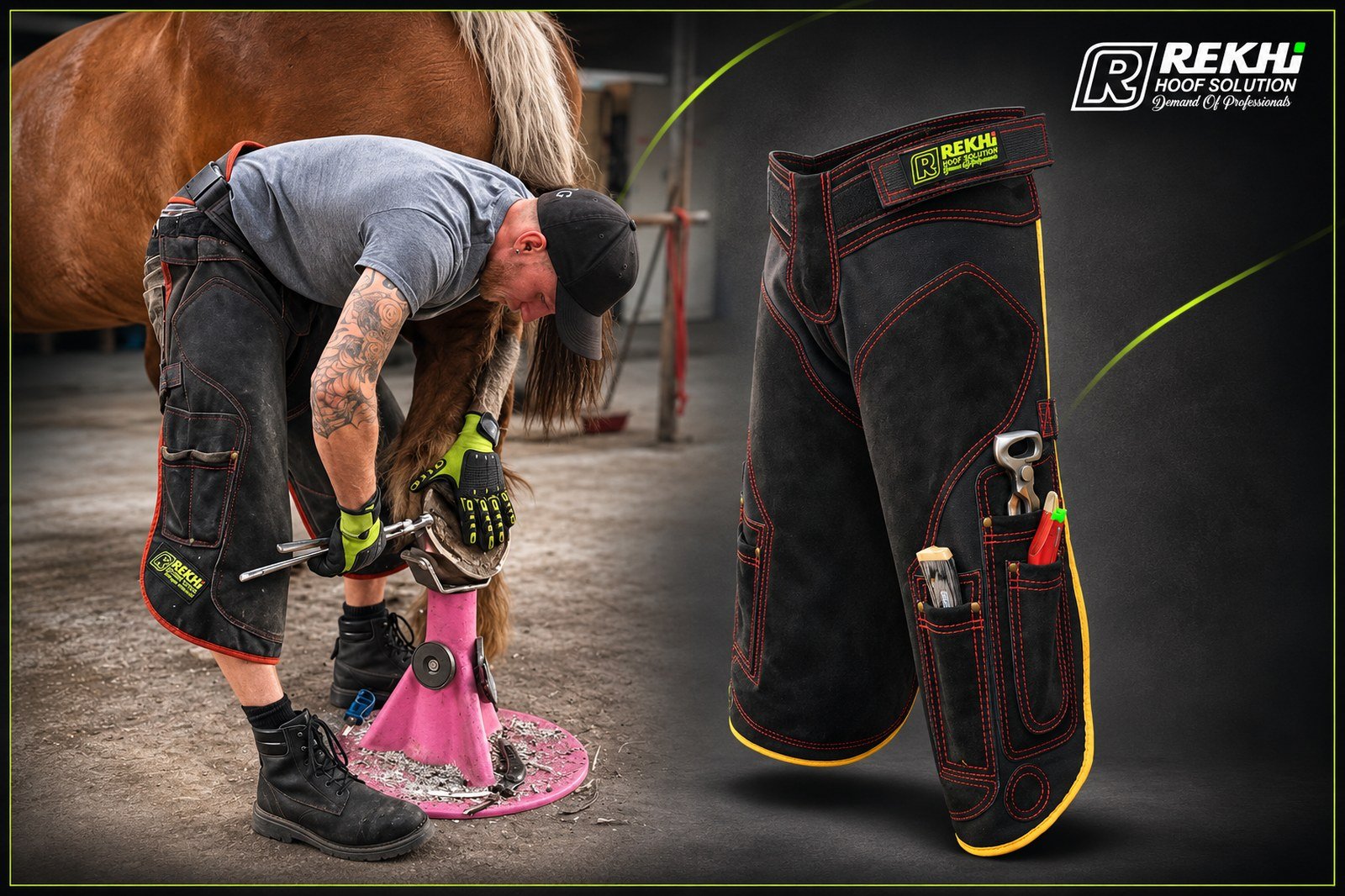
Ask any experienced farrier which piece of kit they would never work without and many will say their apron. The hoof knife, nippers and rasp do the work, but the apron protects the person using them. Whether you shoe horses full time or work as a barefoot trimmer, a well-made apron (often called chaps) is one of the best investments you can make in your safety, comfort and career.
In this post we look at the main benefits of farrier aprons, why barefoot trimmers need one just as much as farriers, and what to check before you buy.
1Protection from cuts and punctures
Hoof work means sharp tools moving fast, very close to your legs. A hoof knife slips on hard sole, nippers snap through a wall, a rasp catches as a horse shifts its weight. Every professional has had a near miss.
Thick leather between the blade and your thigh turns many of those moments into a scratch on the apron instead of a cut that needs stitches. It also guards against:
- Nail points and clenches that tear clothing and skin when a horse snatches its foot away
- Torn-off or loose shoes with sharp edges
- Glancing kicks and scrapes. An apron won’t stop a full kick, but it softens a hoof that brushes past or a leg that pulls back hard.
2Heat protection for hot shoeing
For farriers who shoe hot, leather is essential. Sparks from the forge, hot shoes set against the hoof and smoking horn can burn or melt ordinary work trousers, especially synthetic ones. Leather resists heat and sparks far better and keeps that heat away from your skin.
3A stable, comfortable place to hold the hoof
This benefit is easy to overlook. When you work on a front foot, the horse’s leg rests between your knees and on your thighs. With hind feet, the leg often rests across your lap.
A firm leather apron gives the hoof a steady, non-slip surface. That means:
- Less gripping with your knees and legs to keep the foot in place
- Less fatigue over a long day of back-to-back horses
- Better control of the foot, which makes for more accurate trimming and safer work for both horse and handler
Many aprons add padded or double-layer knee sections exactly where the hoof sits, for extra comfort and protection.
4Freedom of movement
Farriery is physical work. You bend, squat, step under the horse and switch between front and hind feet all day. A good apron is cut for this. Split legs, a contoured shape and adjustable belts and straps let it move with you instead of against you. A badly fitting apron rides up, twists or restricts your stride, which is uncomfortable and can be dangerous around a fidgety horse.
5Cleaner clothes and better yard hygiene
Hoof work is dirty. Mud, manure, hoof dressing, thrush-affected horn and rasp dust all end up on the person doing the work. An apron takes the worst of it, so your clothes last longer and you look presentable at your next client.
Leather is also easy to wipe down between yards. A quick clean helps reduce the chance of carrying dirt and infection from one barn to the next, which clients and vets appreciate.
6Tools within reach
Many modern aprons include practical features that speed up your work:
- Magnets to hold nails, so they’re always to hand
- Tool loops or knife holders for your hoof knife or hoof pick
- Pockets for a marker, measuring tape, gauge or phone
With tools close by, you put the foot down less often. That saves time and makes things easier for the horse.
7A professional image
Clients notice your kit. A quality, well-kept apron tells horse owners you take your trade seriously. It’s a small detail, but it builds trust and confidence in your work.
Do barefoot trimmers really need an apron?
Yes. Barefoot trimmers don’t usually work with a forge, but they often spend more time knifing, nipping and rasping each foot than a farrier who is shoeing. Trimming the sole, bars and wall puts the hoof knife and rasp very close to the thigh, again and again.
The hoof-holding benefit matters just as much, perhaps more, because trimmers often hold each foot longer to balance and finish it.
Many barefoot trimmers prefer a lighter, more flexible apron: thinner or split leather, a shorter length and less hardware. It gives the cut protection and hoof support they need without the weight of a full farrier’s apron, which makes a real difference over a full day of trims.
What to look for when buying a farrier apron
Before you choose, check these points:
- Leather quality and thickness. Look for strong, well-tanned leather that is thick where it matters (thighs and knees) and flexible elsewhere.
- Reinforced knee pads. These are where the hoof sits and where the apron wears fastest.
- Secure belt and leg straps. The apron should stay in place without sliding or twisting as you move.
- The right length and fit. It should suit your height and working stance and cover your thighs to just below the knee.
- Quick-release buckles. If a horse panics, you need to get free fast.
- Solid stitching and hardware. Double stitching and rust-resistant buckles and rivets mean a longer working life.
- Useful extras. Magnets, knife holders and pockets, if they suit the way you work.
Caring for your apron
A good leather apron can last for years with a little care:
- Brush off dirt and wipe it down after use
- Let it dry naturally, away from direct heat
- Condition the leather now and then to keep it supple and stop it cracking
- Check straps, buckles and stitching regularly and repair them early
Final thoughts
A farrier apron isn’t just an accessory. It’s protective equipment that keeps you safer, reduces fatigue, helps you control the hoof and keeps your work clean and professional. Whether you shoe hot every day or trim barefoot horses, the right apron is worth every rupee, pound or dollar.
Looking for a farrier apron?
Rekhi Hoof Solution makes farrier aprons and chaps in leather and canvas, with knee protection and tool pockets.