

Every farrier knows the feeling: the knife catches, you push a little harder, and suddenly the blade jumps further than you meant. A dull hoof knife doesn’t just slow you down. It is one of the most common causes of slips, nicks and uneven trims.
The fix is simple. A truly sharp blade does the work for you, so you can cut with control instead of force. Here is why edge quality matters so much, and what to look for in your next hoof knife.
1What a dull blade really costs you
A blunt knife tears hoof horn instead of slicing it. That leaves a rough, ragged surface on the sole and frog, and makes it hard to see healthy tissue clearly.
- Less control: you have to push hard, so when the blade breaks through, it overshoots. That is when knuckles, wrists and legs get cut, and sometimes the horse too.
- Uneven trimming: a dragging edge skips and chatters, so it is harder to take off thin, even layers.
- Tired hands: more force on every stroke means faster fatigue across a full day of horses.
- Stressed horses: tugging and twisting at the hoof makes many horses restless, which makes the job harder and riskier for everyone.
2What a razor edge and a zero-grind blade mean
Most knives have two angles: the main grind of the blade, plus a small, steeper “micro-bevel” right at the edge. That extra bevel is quick to make, but it adds a thicker shoulder that has to be pushed through the material.
A zero-grind blade has no secondary bevel. The blade is ground flat and thin all the way down to the cutting edge. The result is a true razor edge that:
- Glides through hoof horn with far less pressure, leaving a smooth, clean surface
- Takes thin, controlled slices from the sole and frog, so you remove only what you mean to
- Makes paring and cleaning easier, including tight spots along the white line and around the frog
3Sharp straight out of the box: Rekhi Hoof Solution knives
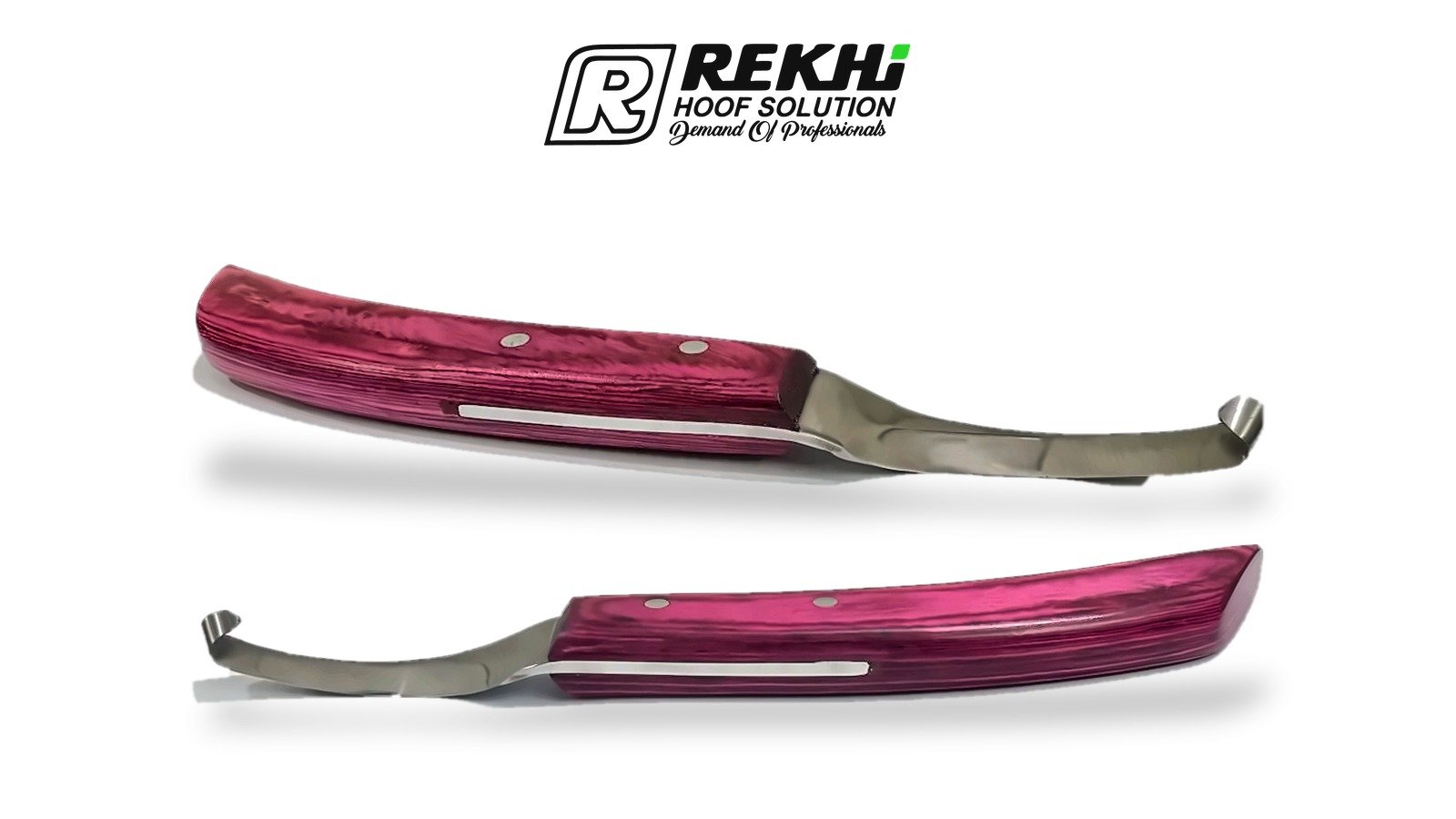
Many hoof knives arrive with a factory edge that needs honing before the first use. At Rekhi Hoof Solution, every knife is finished by hand with a zero-grind razor edge, so it is ready to work the moment you unpack it.
What goes into each knife:
- Japanese 420 high-carbon stainless steel, hardened to 56–58 HRC (Rockwell) to hold a keen edge through many trims and to resist rust in wet, dirty conditions
- A hand-finished zero-grind edge, checked for sharpness before it leaves our workshop
- An ergonomic handle shaped for a secure grip, even with wet or gloved hands
- Right-hand and left-hand models, in loop, curved and straight blade styles for every job
Whether you are a professional farrier or a horse owner doing routine hoof care, a sharper knife gives you cleaner cuts, better control and safer work.
4How to keep your edge razor-sharp
A great edge lasts much longer with a little care:
- Clean after every use. Wipe off dirt, manure and moisture, then dry the blade fully.
- Oil the blade lightly now and then. Stainless steel resists rust well, but a dry, oiled blade stays in top condition for longer.
- Hone little and often. A few light strokes with a fine hoof knife stone or cone keeps the edge keen. Follow the original flat grind and don’t add a steep new bevel.
- Store it safely in a sheath or tool roll so the edge never knocks against rasps, nippers or other tools.
- Use it only on hooves. Cutting rope, cable ties or wire will chip a fine edge quickly.
The bottom line
A sharp hoof knife is a safety tool, not a luxury. With a zero-grind razor edge, you cut with control instead of force: cleaner trims, less fatigue, and fewer slips for you and your horse.
Ready to feel the difference?
Explore the Rekhi Hoof Solution hoof knife range and find the right knife for your hand and your work.